The Future of Smart Homes: Latest Innovations Transforming How We Live
Smart homes have moved well past the novelty stage. The question is no longer whether connected devices belong in your home — it's which innovations are genuinely worth your attention, and what the next wave of home automation will look like when it arrives.
What Is Driving the Smart Home Revolution Right Now
Three forces are converging simultaneously: AI processing power has become cheap enough to run on edge devices, connectivity standards have finally matured, and the cost of IoT sensors has dropped to the point where embedding them in everyday appliances makes economic sense. That combination is what's accelerating smart home adoption faster than any single product launch could.
A smart thermostat that cost $250 five years ago has a functional equivalent under $80 today. Wi-Fi 7 routers are reaching consumer shelves with theoretical throughput exceeding 40 Gbps, and 5G home internet is giving households in dense urban areas a credible broadband alternative. These aren't incremental upgrades — they're the infrastructure layer that makes a genuinely responsive smart home ecosystem possible.
Consumer electronics manufacturers are responding. Refrigerators, washing machines, and even window blinds now ship with embedded connectivity as a baseline feature rather than a premium add-on. The result is a home automation landscape that's broader, faster, and more affordable than it's ever been.
The Rise of AI-Powered Home Automation
AI in smart homes means your devices stop waiting for instructions and start anticipating them. Machine learning models running locally on home automation hubs can now analyze weeks of behavioral data — when you wake up, how you adjust lighting throughout the day, which rooms you use on weekday evenings — and build routines without you ever opening an app.
This shift from reactive to predictive is significant. Earlier generations of smart home tech required explicit programming: "Turn off the lights at 11 PM." Modern AI-driven systems observe that you typically dim the living room lights around 10:45 PM before heading to bed, and they adjust automatically. The distinction matters because it removes friction — the main reason most people abandon complex home automation setups within months of installation.
Voice assistants have also evolved beyond simple command execution. Contextual awareness allows them to understand follow-up queries, infer intent from partial commands, and coordinate across multiple device categories simultaneously. Asking your home assistant to "get the house ready for dinner" can now trigger lighting adjustments, preheat the oven, start a playlist, and lock the front door — all from a single natural language prompt.
The trade-off worth acknowledging: AI-driven automation is only as good as the data it learns from. Households with irregular schedules or multiple occupants with different preferences can confuse these systems. Most platforms are improving multi-user profiling, but it remains an area where the technology is still catching up to real-world complexity.
Matter Protocol and the End of Compatibility Headaches
The Matter protocol is an open-source connectivity standard that allows smart home devices from different manufacturers to communicate natively — no third-party bridge, no proprietary app required. Backed by Apple, Google, Amazon, and Samsung, it's the closest the industry has come to a universal language for IoT devices.
Before Matter, buying a smart home device meant checking compatibility charts and hoping your hub of choice supported it. That friction kept mainstream consumers from building out full ecosystems. Matter changes the calculus: a light bulb, a door lock, and a smart thermostat from three different brands can now share a single network and respond to a single controller.
The practical impact is already visible. Devices certified under Matter 1.2 and 1.3 include support for energy management appliances, robot vacuums, and EV chargers — categories that were previously locked into brand-specific ecosystems. For consumers, this means genuine interoperability without compromising on device choice.
That said, Matter doesn't solve every problem. Thread (the underlying mesh networking protocol Matter relies on for low-power devices) still requires a border router in your setup, and not every existing device can be updated to support the standard. Older smart home investments may still require their original hubs. The ecosystem is improving with each specification release, but a full transition will take several more years.
Next-Generation Smart Security and Privacy
Smart security systems have shifted from passive recording to active intelligence. AI-driven cameras can now distinguish between a delivery driver, a known household member, and an unfamiliar face — reducing false alerts that plagued earlier motion-detection systems and eroded user trust over time.
Smart locks have advanced beyond keypad entry. The latest generation supports multi-factor authentication combining PIN codes, biometrics, and proximity detection from a paired smartphone. Some systems can automatically grant temporary access to service providers within defined time windows, then revoke it — eliminating the need to physically hand over keys or monitor arrivals.
Privacy is the sharper edge of this conversation. Cloud-dependent security cameras transmit footage to remote servers for processing, creating data exposure risks. The industry response has been a meaningful push toward on-device AI processing — running facial recognition and anomaly detection locally rather than in the cloud. This approach reduces latency, limits data exposure, and keeps sensitive footage off third-party infrastructure. It's a genuine architectural improvement, not just marketing language.
Consumers evaluating smart security products should ask directly: where is video processed, how long is it stored, and who has access to it? These questions now have meaningful variation across products, and the answers affect both privacy and performance.
Smart Energy Management and Sustainable Living
Smart energy management is turning homes into active participants in the power grid rather than passive consumers. The combination of smart thermostats, solar panels, home battery storage, and grid-aware appliances creates a system that can shift energy consumption to off-peak hours automatically — reducing both costs and grid strain.
Smart thermostats remain the highest-ROI entry point for most households. Systems that learn occupancy patterns and adjust heating or cooling accordingly can reduce HVAC energy consumption by 15–25% compared to traditional programmable thermostats, according to independent efficiency studies. When integrated with weather forecasting APIs, they can pre-condition a home before a heat wave arrives rather than reacting after the fact.
EV charger integration is the next frontier. A grid-aware home energy system can detect when electricity prices drop overnight, automatically charge an electric vehicle during that window, and report the savings back through a unified dashboard. Some systems can even discharge home battery storage back to the grid during peak demand events — a practice called vehicle-to-grid (V2G) that utilities are beginning to compensate homeowners for.
Solar integration through platforms like the U.S. Department of Energy's solar homeowner resources has become more accessible, with smart inverters that communicate directly with home automation hubs to optimize self-consumption versus grid export in real time.
The Connected Kitchen, Bedroom, and Beyond
Smart appliances are expanding into rooms where connectivity wasn't previously a priority. The connected kitchen, bedroom, and living space now represent distinct product categories with meaningful innovation — not just Wi-Fi-enabled versions of existing appliances.
Refrigerators with internal cameras and inventory tracking can identify when staples run low and add them to a shared shopping list automatically. The technology isn't perfect — produce recognition still struggles with unlabeled items — but for packaged goods it's functional today. Paired with smart ovens that can identify compatible recipes and suggest cooking times, the kitchen is becoming a genuinely assistive environment.
Sleep technology has matured considerably. Non-contact sleep trackers embedded in mattress pads or bed frames can monitor heart rate, breathing patterns, and sleep stage cycles without requiring a wearable. When integrated with smart thermostats and lighting systems, they can adjust bedroom temperature during deep sleep phases and use gradual light increases to simulate sunrise for gentler wake-ups.
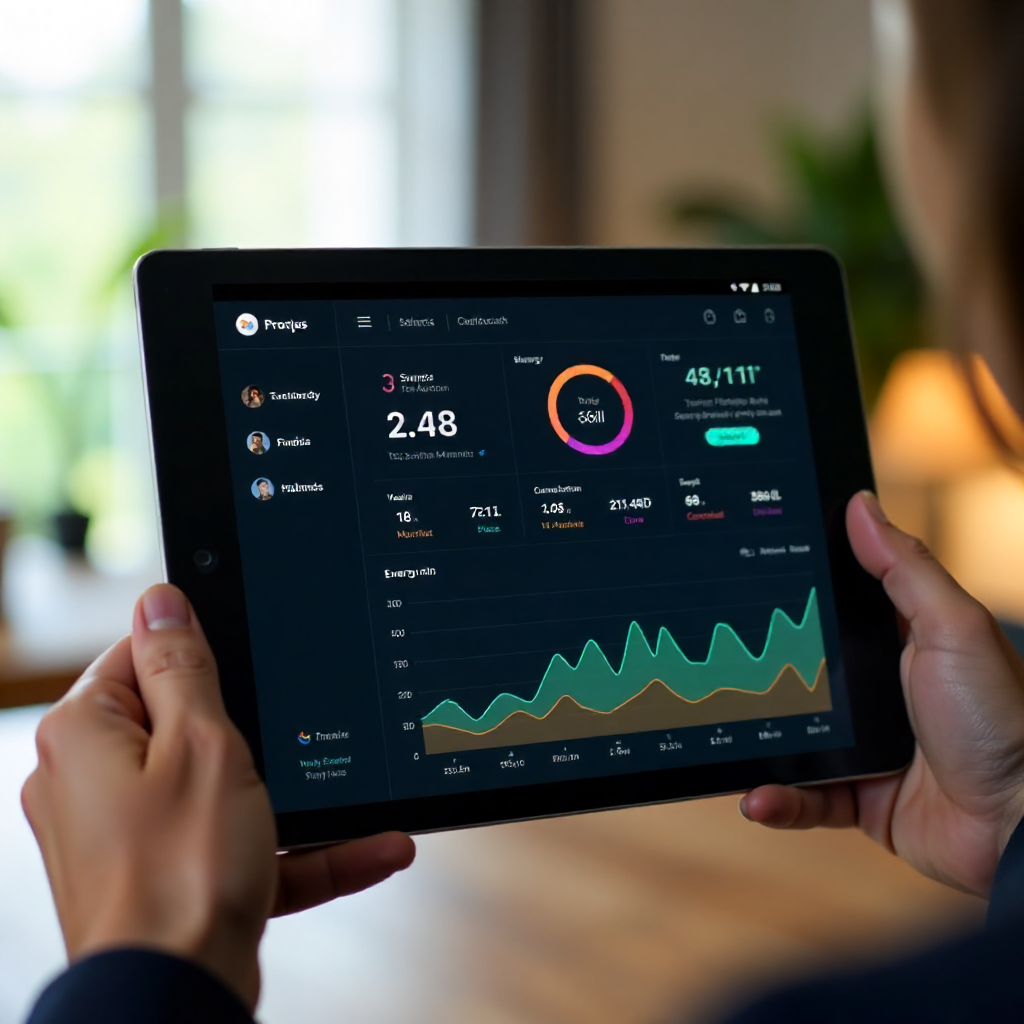
Ambient displays — low-power screens designed to show useful information passively without demanding attention — are finding a role as the quiet connective tissue of the smart home. A display in the kitchen showing weather, calendar events, and energy usage doesn't require interaction; it simply makes the home's data layer visible at a glance.
What to Expect in the Next 3–5 Years
Ambient computing is the direction the smart home is heading: technology that recedes into the background and responds to context rather than commands. Interfaces will become less visible. The interaction model will shift from "tell the home what to do" toward "the home understands what you need."
Health monitoring is likely to be the most consequential development in that window. Passive sensors capable of detecting irregular heart rhythms, changes in gait that might indicate fall risk, or air quality conditions linked to respiratory stress are already in early commercial deployment. As these systems mature and gain clinical validation, the home itself may become a continuous health monitoring environment — with implications for preventive care and aging in place.
Home robotics will move from single-function devices (vacuums, lawn mowers) toward more generalized platforms. Early-stage robots capable of navigating home environments and performing simple manipulation tasks — retrieving objects, loading dishwashers — are in developer preview. They won't be mainstream within three years, but the trajectory is clear.
Connectivity will continue improving. Wi-Fi 7 and 5G home internet together will reduce the latency and bandwidth constraints that currently limit real-time device coordination. As the Matter standard expands its device category coverage, the friction of building a multi-brand ecosystem will continue to fall.
The smart home of 2029 won't announce itself. It will simply work — quietly, efficiently, and with enough awareness of your preferences to feel less like technology and more like a well-run household.
Frequently Asked Questions
What is the Matter protocol and why does it matter for smart homes?
Matter is an open-source connectivity standard that enables smart home devices from different manufacturers to work together natively. It eliminates the need for brand-specific hubs or compatibility workarounds, making it significantly easier to build a cohesive smart home ecosystem using products from multiple vendors.
Are smart home devices secure and private to use?
Security and privacy vary significantly by product and manufacturer. Devices that process data locally (on-device AI) generally offer stronger privacy than cloud-dependent alternatives. Look for end-to-end encryption, transparent data policies, and regular firmware update commitments when evaluating any smart home product.
Which smart home innovations offer the best value right now?
Smart thermostats and energy management systems consistently deliver measurable ROI through reduced utility bills. Smart security cameras with on-device processing offer both practical value and stronger privacy. Matter-certified devices are worth prioritizing for long-term compatibility.
How does AI improve smart home automation?
AI enables smart home systems to learn behavioral patterns and automate routines without manual programming. It also powers advanced features like occupancy prediction, anomaly detection in security cameras, and natural language understanding in voice assistants — reducing the manual configuration burden that made earlier systems frustrating to maintain.
Will smart home technology become more affordable in the coming years?
Yes. Component costs for IoT sensors and edge AI processors have been declining steadily. Increased competition across device categories and the commoditization of connectivity standards like Matter will continue pushing prices down, making capable smart home setups accessible to a broader range of consumers over the next few years.